Tourism Is No Longer (Only) About Places
17/07/2026 2026-07-17 10:32Tourism Is No Longer (Only) About Places
Tourism Is No Longer (Only) About Places
Tourism Is No Longer (Only) About Places
At the Naturalis Summer Talk, industry leaders discussed how the language, communication and expectations of travelers are changing. Giulio Contini, General Director of SIO, shares a reflection that speaks directly to the future of tourism education.
In short
- The value of a trip is measured less by material offerings and more by the quality of the relationships it creates.
- Technical and digital skills remain essential — but they’re no longer enough.
- Empathy, emotional intelligence and cultural sensitivity are becoming hospitality’s real competitive edge.
- The question for tomorrow’s education: professionals who can manage complexity, or people who can create memorable experiences?
An industry changing its language
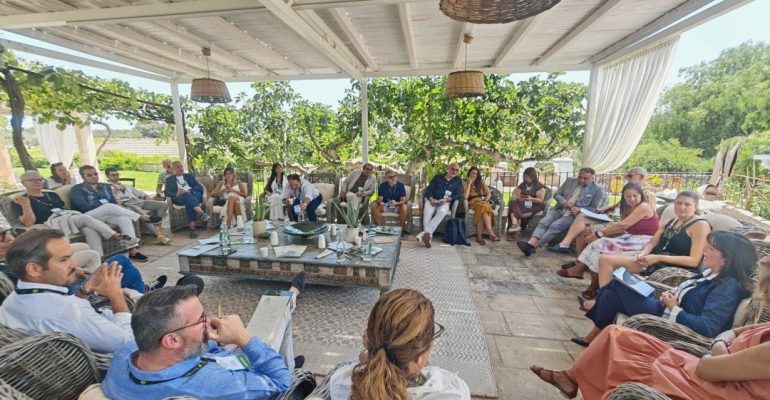
Tourism is being reshaped, and it’s no longer just the numbers telling the story — it’s the way the industry talks about itself. This was the focus of the first edition of the Naturalis Summer Talk, a format reserved for thirty selected professionals — entrepreneurs, managers and journalists — hosted in Martano, in the heart of Salento, by Naturalis Bio Resort: an eighteenth-century farming hamlet turned luxury retreat within a 20-hectare estate. The gathering, held under the patronage of the Puglia Region and Pugliapromozione, focused on how places shape identity, and on how the language, communication and expectations of travelers are evolving.
Giulio Contini’s reflection
Among the panel’s speakers, Giulio Contini, General Director of the Italian Hospitality School (SIO), placed relationships at the center of his talk: the focus of tourism communication has shifted — at the heart of the experience is no longer what you get, but who you’re with. Today’s traveler isn’t just looking for a place, but for a human community to share their time with — and training in the sector must aim to develop relational skills and emotional intelligence, ahead of artificial intelligence.
Contini returned to this theme publicly after the event, in a broader reflection shared on his LinkedIn profile:
For years we believed hospitality’s core was rooms, services and destinations. Today, however, the value of a trip is measured less and less by its material offerings and more and more by the quality of the relationships it manages to create. Travelers don’t just choose a property or a destination: they look for experiences to share, stories to live, and people to connect with.
A profound shift, one that speaks directly to those working in education. In recent years, the industry has rightly invested heavily in technical and digital skills. But the tourism of the future will require something more: professionals capable of listening, understanding and building authentic relationships.
Empathy, emotional intelligence and cultural sensitivity are not soft extras, Contini wrote — they will increasingly be hospitality’s true competitive advantage. Because before being an economic sector, tourism remains, first and foremost, an encounter between people.
The question that matters
From the exchange with the other panelists — including the editor of one of Italy’s leading travel monthlies, a manager from a major international hotel chain, and the founder of the host property — Contini takes home a question that speaks directly to the future of education:
For SIO, it’s the latter that will make the real difference in the tourism of tomorrow.
- Tourism Is No Longer (Only) About Places

- Scalability and Industrial Dignity: The Future of Italian Tourism according to Giulio Contini
- An Educational Bridge Between Italy and Egypt: Courses Launch at the E. MATTEI Campus in Hurghada
- Inside Hospitality – The Future of Tourism with Andrei Rigazio

- JOB&Orienta 2025 – Build Your Future in Hospitality

- Minister of Tourism Santanchè unveils Italian Hospitality School “Campus Enrico Mattei” in Egypt